

What’s In This Guide
- Can a Moving Truck Reserve Street Space in Greenwich?
- Why Curb Access Shapes a Greenwich Moving Day
- Common Greenwich Access Scenarios and Planning Mistakes to Avoid
- How to Plan Truck Access Before Moving Day
- Timing, Permits, and Coordination Factors
- When to Bring in a Professional Local Moving Team
- Frequently Asked Questions
- Ready to Plan a Greenwich Move With Access Already Sorted Out?
Searching for local movers near me in Greenwich often starts with price and availability. Parking, curb space, and truck access are key operational details to confirm early. Planning for a Greenwich address requires checking parking rules, driveway dimensions, or property guidelines. Driveway layouts, local road rules, and building policies can all affect how a moving truck reaches a residence.
Quick Facts
- On-street parking regulations vary across Greenwich, so checking local street signage and municipal guidelines before moving day helps prevent parking conflicts or citations.
- Road work, street obstruction, or extended curb use in the town right-of-way may require clearance through the Town of Greenwich Highway Permit application process, managed by the Department of Public Works.
- Box trucks and rental moving trucks are prohibited from the Merritt Parkway, Wilbur Cross Parkway, and Milford Parkway under CTDOT vehicle and size restrictions, affecting route selection to Greenwich addresses.
- Staging both family vehicles and a large moving truck on a single property requires advance planning to maintain clear access to the loading area.
- Access coordination, including HOA notices, gated property clearance, and building management reservations, should begin well ahead of a scheduled Greenwich move.
Can a Moving Truck Reserve Street Space in Greenwich?
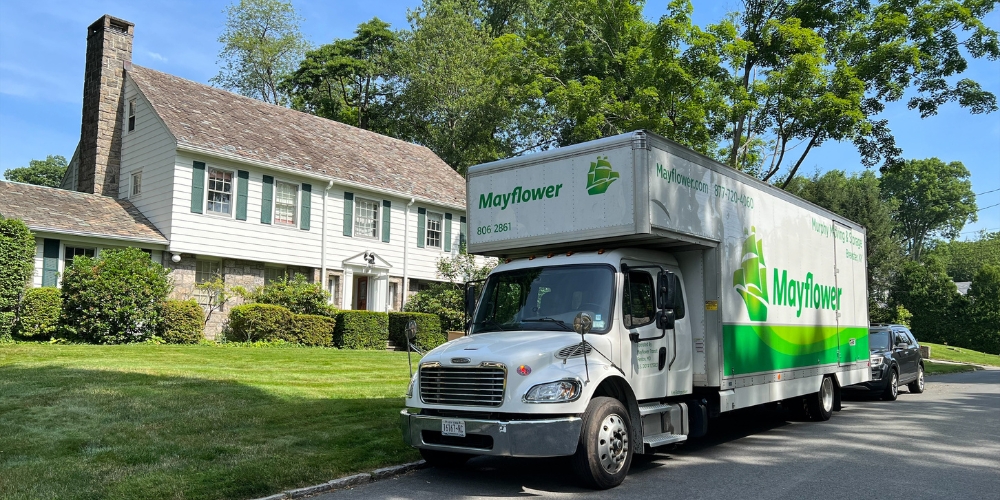
A moving truck cannot claim street space automatically. Depending on the street and proposed activity, a Highway Permit from the Greenwich Department of Public Works may be required if moving operations involve road work, street obstruction, or use of the Town right-of-way. Private driveway suitability should be confirmed separately before moving day.
Residential Parking Permit Streets
Certain streets restrict on-street parking under the Town of Greenwich Residential Parking Permit program. Before parking a commercial moving truck on one of these streets, confirm posted restrictions and whether a Greenwich parking permit or other authorization applies.
Right-of-Way or Curb Occupancy
If a move requires blocking a portion of the street, sidewalk, or town right-of-way, a Highway Permit from the Department of Public Works may be necessary. The application for a Town of Greenwich Highway Permit details submittal requirements and processing steps.
Private Driveways and Private Roads
Properties located along private roads, gated entrances, or association-maintained communities are subject to private rules and regulations as well as applicable municipal laws. Confirm entry protocols and rules with property management or HOA representatives prior to moving day.
Why Curb Access Shapes a Greenwich Moving Day
Curb access determines how far a crew carries every box, how long the truck sits exposed to traffic, and whether the move stays on schedule. Planning for long driveways, narrow roads, or building loading areas helps keep moving day efficient.
Distance From Truck to Door
A truck parked on the street instead of the driveway adds carry distance for every item, which extends loading and unloading time significantly for larger homes.
Street Width and Traffic Flow
On narrower Greenwich residential roads, a stationary moving truck can block or restrict traffic flow. If moving operations require use of the Town right-of-way, confirm applicable Highway Permit and traffic-control requirements with the Department of Public Works.
Vehicle Competition at the Property
Data USA reports average car ownership of two cars per household for the Greenwich census place. Regardless of household vehicle count, confirming where family vehicles will sit during the move matters because personal vehicles may compete with the moving truck for driveway and loading space.
READ MORE: What to Pack First When Moving (And What to Pack Last)
Common Greenwich Access Scenarios and Planning Mistakes to Avoid
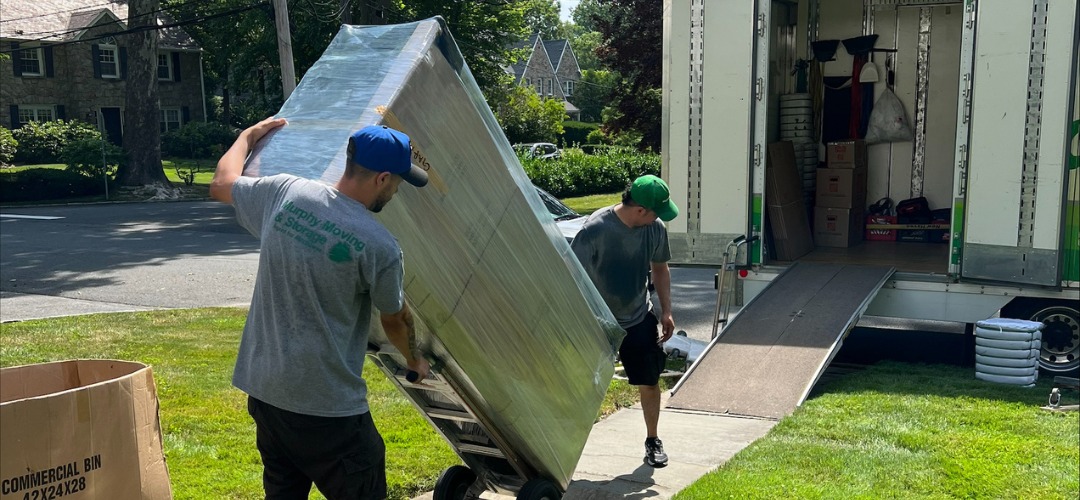
Common access problems on Greenwich moves fall into a handful of recurring categories. Knowing which one applies to a specific property narrows down what to confirm before booking a crew.
Gated Communities and Backcountry Estates
Long or narrow driveways on backcountry properties can pose access challenges for full-sized moving trucks. Some jobs require a shuttle vehicle to ferry items between the larger truck parked nearby and the home itself. Gate codes or security notifications need to be arranged in advance, as unannounced commercial vehicles may be turned away at gated entrances.
Downtown Condos and Multi-Unit Buildings
Some multi-unit buildings require specific move-in windows, elevator reservations, and a Certificate of Insurance (COI). The property manager should provide the exact certificate-holder and coverage requirements. Confirming these requirements early helps reduce the risk of loading delays.
Street Parking Regulations
Parking on public streets without checking local regulations can lead to unexpected delays or parking tickets. Verifying posted street signs and town guidelines ahead of time helps reduce the risk of parking violations during the move.
Narrow or Sloped Driveways
Driveways with tight turns, low overhangs, or steep grades sometimes cannot safely accommodate a full-size truck. Confirming driveway width and clearance with the moving company ahead of time helps avoid a same-day decision to use street parking instead, which can raise separate parking or permit requirements.
How to Plan Truck Access Before Moving Day
Confirming access early helps prevent common Greenwich moving-day delays. The sequence below works for single-family homes, condos, and gated properties alike.
Step 1: Identify the Street or Property Type
Determine whether the address sits on a public Greenwich street, a private road, or within a gated or multi-unit community. This single detail identifies which Town department, property manager, or association contact to consult.
Step 2: Contact the Right Authority
For public streets, contact Greenwich Town Hall or the Department of Public Works if a Highway Permit is required for use of the Town right-of-way. For gated properties, private roads, or condo complexes, coordinate directly with the property management office or HOA board.
Step 3: Confirm Driveway and Truck Clearance
Walk the driveway or have the moving company assess it for width, overhead branches or wires, and surface condition. Flag any tight turns or low clearance points that could require a shuttle vehicle.
Step 4: Secure Building Requirements for Condos
For condo or apartment buildings, confirm the required move-in and move-out window, reserve the freight elevator, and provide the building’s requested COI ahead of the date. If floor and wall protection are required, confirm with property management and your moving team who will supply those materials.
Step 5: Share Access Details With the Moving Coordinator
Put every access detail in writing and share it with the assigned move coordinator: street type, permit status, driveway conditions, gate codes, and building rules. A documented plan reduces the chance that any one detail gets missed on the day itself.
Step 6: Confirm Timing Early
Greenwich states that Highway Permit review takes approximately 7 to 10 business days. Building, HOA, and elevator approvals may follow separate timelines, so start those requests early enough to resolve access issues before moving day.
Timing, Permits, and Coordination Factors

Several factors shape how much lead time a Greenwich move actually needs, beyond just booking a date on the calendar.
Seasonal Demand
Peak moving months see higher demand across the industry, which can affect scheduling availability for professional moving crews and elevator reservations. Planning early provides greater flexibility in locking in preferred moving dates.
Route Restrictions
Box trucks and rental moving trucks traveling toward Greenwich cannot use the Merritt Parkway, Wilbur Cross Parkway, or Milford Parkway. Connecticut DOT parkway restrictions prohibit box trucks and rental trucks and also restrict vehicles exceeding specified dimensions, including more than 8 feet in height or 24 feet in length. Confirming the truck route in advance helps avoid last-minute detours and navigation errors.
Documentation Requirements
A COI for building management, a Highway Permit for use of the Town right-of-way, or property association notifications require administrative lead time. Preparing these documents well in advance helps prevent last-minute scheduling issues.
Weather and Street Conditions
Winter weather can impact driveway access, curb availability, and overall roadway safety. Clearing driveways, walkways, and loading zones of ice and snow prior to the arrival of the moving truck helps maintain a safer, more efficient workflow.
When to Bring in a Professional Local Moving Team
Some access situations are manageable with basic planning. Others benefit from a moving company that has already navigated the same streets, buildings, and gated communities before.
A professional local team is worth bringing in when a move involves:
- A backcountry property with a long or narrow driveway that may need a shuttle vehicle
- A condo or apartment building with elevator reservations, move windows, and a COI requirement
- A residential street where parking rules or right-of-way permissions need to be confirmed
- Multiple vehicles competing for limited driveway space on moving day
- A tight timeline that leaves little room to resolve access questions independently
Working with experienced movers helps streamline move-day logistics. Professional teams are familiar with handling complex driveway layouts, coordinating shuttle vehicles when necessary, and fulfilling building management requirements efficiently.
Frequently Asked Questions
Does Greenwich require a permit for a moving truck parked in a driveway?
A moving truck parked entirely on private property generally does not fall under town street-parking rules. Private communities, HOAs, or gated properties may still impose their own access requirements, so those rules should be confirmed separately.
What if a full-size moving truck cannot fit in the driveway?
The moving company may need to stage the larger truck nearby and use a smaller shuttle vehicle between the truck and the home. This can add handling time, so driveway width, turning radius, grade, and overhead clearance should be reviewed before moving day.
Can neighbors reserve curb space for their own vehicles during my move?
Public curb space is generally governed by town parking rules rather than informal reservations between neighbors. If a move depends on a specific curb area remaining open, confirm whether the town requires any temporary restriction or authorization instead of relying on cones or personal vehicles to hold the space.
Who should provide a building’s COI requirements to the mover?
The resident should obtain the building’s exact COI requirements from the property manager or management company and provide them to the mover early. This avoids delays caused by missing certificate holders or additional insured details, improper coverage amounts, or late submissions.
Should the moving company inspect access before moving day?
For properties with narrow driveways, gates, steep grades, limited turning space, or restricted building access, a pre-move access review can identify whether a full-size truck, shuttle vehicle, or different loading plan will be needed.
Ready to Plan a Greenwich Move With Access Already Sorted Out?
A moving day goes smoothly when parking, curb access, and truck logistics are confirmed well before the crew arrives. Murphy Moving & Storage has provided moving and storage services since 1914. Today, our company serves Greenwich and other locations throughout Connecticut and New York.
A dedicated move coordinator is assigned to walk through access details, permit requirements, and building rules from the initial quote through final delivery.
