

What’s In This Guide
- What Should You Discuss With Antique Furniture Movers Before Moving Day?
- Why This Conversation Matters for Fairfield Homeowners
- Common Risks and Planning Mistakes With Antique Moves
- How to Prepare Antiques for a Fairfield Move Step by Step
- What Affects Timeline and Coordination for Antique Moves
- What Should You Check After Antique Furniture Is Delivered?
- When to Bring in a Professional Antique Moving Team
- Frequently Asked Questions
- Ready to Plan Your Fairfield Antique Move?
Antique furniture often requires more planning than standard household furniture. A colonial dresser with a hairline joint, a marble-top table, or a grandfather clock can require a more focused handling plan. For Fairfield homeowners searching for the best movers near me to handle inherited or collected pieces, a thorough pre-move survey can identify access, packing, and handling needs before transport.
Quick Facts
- Documenting item values, understanding carrier liability limits, and reviewing available valuation options help establish protection expectations before moving day, including any requirements for declared high-value items.
- Condition photographs of joints, veneer, and finish give both the homeowner and the crew a shared record of the item’s pre-move condition.
- Marble tops, glass panels, and mirrors may require individual protection and, when removable, separate packing from their bases.
- Grandfather clocks and mechanical antiques require specialized preparation, such as removing and packing pendulums and weights while securing cables or chains before moving.
- Narrow Fairfield colonial staircases often require access measurements taken before loading day.
What Should You Discuss With Antique Furniture Movers Before Moving Day?
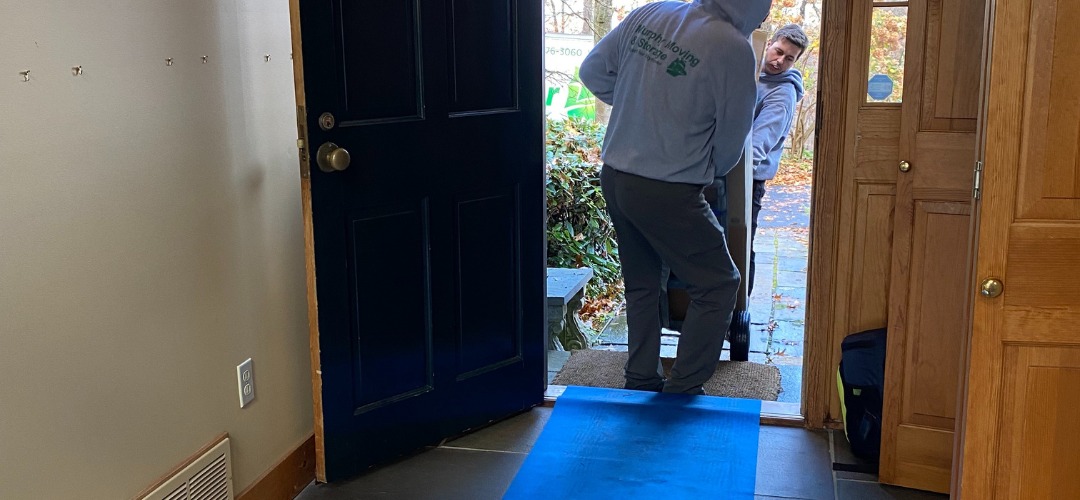
Homeowners should walk the antique furniture movers through valuation details, prior repairs, weak joints, and any piece requiring custom crating before the crew arrives. This conversation should also cover access points, placement plans, and items that need specialized care. Skipping this planning step increases the risk of preventable damage.
Why This Conversation Matters for Fairfield Homeowners
Fairfield includes historic Colonial-era homes as well as later housing. In older homes, staircases, hallways, and entryways can create tight clearances for large furniture. Antiques passed down through families or acquired over years of collecting can present additional fit and clearance challenges in these spaces.
A piece that has remained in one room for decades may not have been evaluated against tight doorways or switchback staircases. Addressing these spatial constraints during pre-move planning protects both the piece and the home during loading and unloading.
Common Risks and Planning Mistakes With Antique Moves
Several preventable issues during antique moves can stem from planning and handling oversights. Identifying these risk areas during initial planning gives homeowners and movers time to prepare appropriate handling strategies.
- Overlooking pre-move valuation. Without reviewing existing appraisals and selected valuation coverage, homeowners may lack clear alignment with movers on protection limits.
- Not photographing existing wear. Scratches, veneer lifting, or old repairs need a visual record before anything is wrapped.
- Failing to disclose prior repairs. A previously glued joint, replaced leg, or other repaired area may be more vulnerable to handling stress, so the crew should know about it before the piece is lifted or wrapped.
- Underestimating marble, glass, and stone. These brittle materials can require additional protection during handling and transport. Removable tops or panels may need to be wrapped and transported separately from their bases when their construction allows safe removal.
- Assuming standard blankets are enough. Mechanical antiques, oversized case pieces, and structurally fragile items often need more than blanket wrapping to survive loading and transit.
Guidance from the Smithsonian Museum Conservation Institute recommends identifying an object's weak points before handling, choosing appropriate grip points, and planning the handling process before lifting. The guidance also notes that packing objects for transport requires care and adequate space. These precautions reinforce the importance of careful pre-move planning for antiques.
How to Prepare Antiques for a Fairfield Move Step by Step
A structured walkthrough before the crew arrives reduces the guesswork on moving day and gives both the homeowner and the movers a shared reference point.
Step 1: Document Value, Condition, and Valuation Coverage
Gather existing appraisal paperwork and take clear condition photographs showing joints, hardware, and finishes. Review carrier liability limits, available valuation coverage options, and any declaration requirements for high-value items with your mover before moving day.
Step 2: Disclose Prior Repairs and Weak Joints
Point out any leg that has been reglued, any veneer that has lifted and been reset, or any drawer that no longer sits flush. Movers cannot account for a hidden weakness they were never told about.
Step 3: Separate Marble, Glass, and Mirrored Surfaces
Unattached marble tops, glass display panels, and large mirrors should be individually protected. Removable components may also need to be separated, wrapped, and crated or padded individually when their construction and condition allow safe removal.
Step 4: Flag Mechanical Antiques
Grandfather clocks require specific preparation, including removing and packing pendulums and weights while securing cables or chains before moving. Mechanical items need dedicated disassembly and securing steps before transport.
Step 5: Confirm Crating Needs
Oversized, structurally delicate, or high-value pieces may call for custom-built wood crating rather than blanket wrap and shrink film alone. This decision should be made during the walkthrough.
Step 6: Measure Access Points and Plan Placement
Walk the actual route the piece will travel, from its current room through hallways, staircases, and doorways, to the truck. Confirm the same at the destination so placement is planned rather than improvised.
READ MORE: Fairfield Moves: Use Inventory Sheets Like a Pro
What Affects Timeline and Coordination for Antique Moves

Antique relocations require detailed coordination, and project requirements influence overall timeline and cost. Scope and specialized packing needs vary from piece to piece.
Factors that commonly affect the estimate include:
|
Factor |
Why It Matters |
|
Number of items requiring custom crating |
Each crate is built to the piece’s specific dimensions |
|
Access conditions at both properties |
Narrow staircases or tight doorways add handling time |
|
Condition documentation needs |
Detailed photography and inventory add coordination time |
|
Specialty materials required |
Marble, glass, and mechanical items need dedicated packing supplies |
|
Distance and scheduling |
Local Fairfield moves and longer relocations carry different logistics |
These factors explain why project requirements vary across homes. Requesting an in-person or virtual estimate helps the mover develop an estimate based on your specific inventory and access conditions.
What Should You Check After Antique Furniture Is Delivered?
The antique-moving process does not end when a piece reaches its new room. Before protective materials are discarded or furniture is put back into regular use, homeowners should inspect each item against the condition documented before the move.
1. Compare Each Piece With Pre-Move Photos
Start with the photographs taken before packing. Compare the same joints, corners, edges, veneer, hardware, and finished surfaces shown in those images.
Pre-move photos make it easier to distinguish an existing scratch or repair from something that may have occurred during handling or transport.
2. Check Joints Before Moving the Piece Again
Look closely at legs, arms, frames, drawer supports, and other structural connections before repositioning heavy furniture. A joint that appears loose or shifted should be evaluated before the piece is lifted again.
Avoid repeatedly moving an antique around the room until its condition has been checked.
3. Inspect Veneer, Finish, Glass, and Stone
Review fragile surfaces under good lighting. Check veneer for new lifting, finished surfaces for abrasions, and glass or mirrored panels for cracks or chips.
Marble and stone components should also be inspected along their edges and corners, where impact damage can be easier to miss.
4. Account for Removed Hardware and Components
Confirm that keys, finials, shelves, brackets, drawer pulls, and other components removed for transport have arrived with the correct furniture.
Use the labels and photographs created before the move to confirm where each part belongs before reassembly begins.
5. Document Concerns Before Repairing Anything
If something looks different from its documented pre-move condition, photograph it before attempting a repair, cleaning the area, or continuing with reassembly.
Keep those images with the original appraisal, inventory, and condition photographs. A complete record makes it easier to discuss the issue with the moving coordinator and determine the appropriate next step.
When to Bring in a Professional Antique Moving Team

Not every antique requires custom crating or a specialist crew, but certain conditions consistently call for professional handling rather than a general moving approach.
Consider a specialized team when:
- The piece has documented structural fragility, such as a previously repaired joint or unstable veneer.
- Replacement value is high enough that a coverage conversation is warranted before moving day.
- The item has internal mechanical components, like a clock movement, that require disassembly or securing.
- Marble, glass, or stone elements are integrated into the piece rather than removable.
- Access at either property involves stairs, tight turns, or doorways narrower than the item itself.
A professional crew trained in specialty handling will typically request the same information covered in the walkthrough above: appraisal records, condition photos, and disclosure of prior repairs, before finalizing a plan for crating and transport.
Frequently Asked Questions
Should antique cabinets and drawers be emptied before moving?
Generally, removable contents should be taken out before the piece is moved. Books, dishes, collectibles, and other contents add weight and can shift during handling. Ask the moving coordinator whether drawers themselves should remain in place or be removed based on the construction and condition of the furniture.
Should antique furniture be cleaned or polished before moving?
Avoid applying unfamiliar cleaners, oils, or polishes immediately before a move. Some antique finishes are sensitive to moisture or cleaning products. Routine dusting may be appropriate, but valuable or delicate finishes may warrant guidance from a qualified furniture conservator.
What should happen to keys and small removable parts during an antique move?
Keys, finials, shelf supports, removable hardware, and other small components should be identified and kept with the correct piece. Labeling them separately helps prevent loss and makes reassembly easier at the destination.
Can antiques be placed in temporary storage during a move?
Yes, but storage conditions should match the needs of the items involved. Ask about temperature and humidity conditions, handling procedures, and how fragile furniture will be positioned and protected if storage is required between homes.
When should an antique conservator be consulted instead of relying only on movers?
Consider consulting a qualified conservator when a piece has significant structural instability, active finish deterioration, loose veneer, or another condition that may require treatment before handling. Movers can plan around known weaknesses, but restoration and conservation work fall outside ordinary moving services.
Ready to Plan Your Fairfield Antique Move?
Antiques deserve a different level of planning than standard household furniture, and that planning starts with a conversation. Murphy Moving & Storage has served Connecticut and New York families since 1914, offering specialized packing and custom crating alongside full and partial packing services.
A pre-move walkthrough with an experienced coordinator is the clearest way to confirm what your antiques actually need before the crew arrives.
Related Posts
