

What’s In This Guide
- What Makes a Stamford Townhouse Move Different From a Typical Local Move?
- Why a Floor-by-Floor Plan Matters for Narrow, Multi-Level Homes
- Common Mistakes That Slow Down Townhouse Moves in Stamford
- How to Plan a Floor-by-Floor Townhouse Move
- Pre-Move Access Checklist for Stamford Townhouses
- What Affects Timing and Coordination for a Townhouse Move?
- When Should You Bring in Professional Townhouse Movers?
- Frequently Asked Questions
- Ready to Plan Your Stamford Townhouse Move?
Stamford townhouse moves often involve multiple floors, narrow stairwells, shared walls, and limited parking. Many layouts place a garage or lower-level room beneath the main kitchen and living area, with bedrooms on upper floors.
A floor-by-floor plan solves that problem before it becomes a moving-day delay. Working through this plan before contacting residential movers near you gives the crew and the household a shared game plan for every level of the home.
Quick Facts
- Stamford has specific on-street commercial truck parking regulations, so confirm current city requirements and any property-specific parking restrictions before moving day.
- Connecticut’s residential building code requires at least one egress door in each dwelling unit to provide a clear width of at least 32 inches. Other doors may be narrower, so measure the actual entrance before determining whether large furniture will fit.
- Stairs, ramps, landings, and floors accounted for roughly 69 percent of estimated emergency department-treated injuries associated with products in the home, structures, and construction category in 2024.
- Staging boxes by destination floor, rather than by room type, cuts down on repeat trips through narrow stairwells during loading and unloading.
- Furniture disassembly decisions belong on the pre-move walkthrough, not on the stairs, especially for bed frames, sectionals, and dining tables with extension leaves.
What Makes a Stamford Townhouse Move Different From a Typical Local Move?
Moving between townhouse levels often requires navigating stairs, landings, and tight turns that complicate oversized furniture moves. Compared with buildings that have elevators or residences with direct driveway access, some townhouses offer fewer alternative routes, making floor-by-floor sequencing especially useful.
Why a Floor-by-Floor Plan Matters for Narrow, Multi-Level Homes
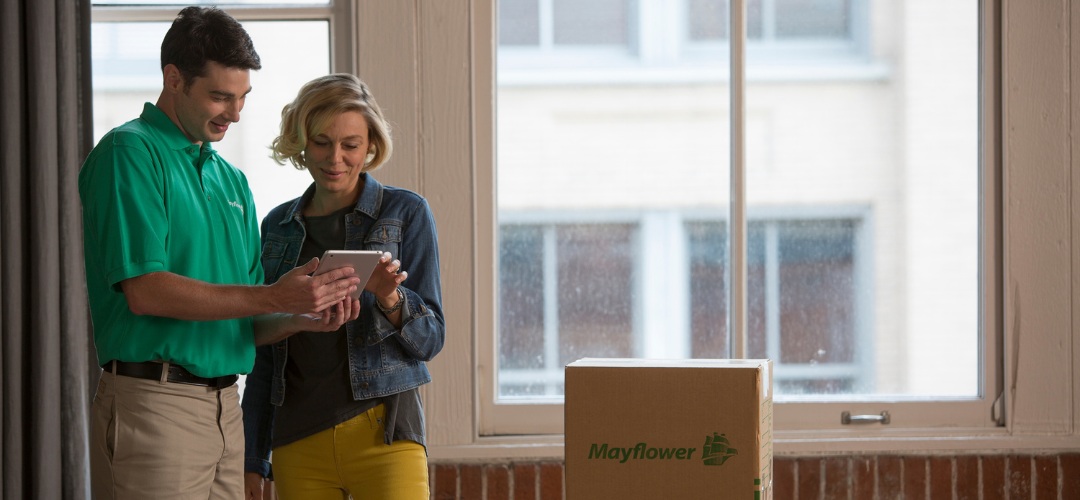
Repeated stair carries increase the amount of handling required during a townhouse move, especially around narrow landings, turns, and confined stairwells. A floor-by-floor plan reduces unnecessary trips through these areas and helps keep the moving route organized.
Common Mistakes That Slow Down Townhouse Moves in Stamford
Many townhouse moving delays stem from access problems rather than packing. Unmeasured doorways, last-minute furniture disassembly, blocked stairwells, and unconfirmed parking can all slow down moving day.
- Skipping doorway and stairwell measurements. Assuming a sofa or bed frame will fit based on measurements from the previous residence can lead to problems when the new townhouse has narrower entrances, landings, or stair turns.
- Deciding on disassembly at the stairs. Waiting until a dresser or bed frame gets stuck on a landing wastes crew time and increases the chance of wall or furniture damage.
- Labeling boxes only by room. Include both the destination room and floor on each box so movers can place it on the correct level without unnecessary backtracking.
- Leaving hallways and landings cluttered. Rugs, plants, and side tables left in stairwells create tripping hazards during the busiest hours of the move.
- Not confirming truck parking in advance. Stamford's parking restrictions and residential permit zones can limit where a moving truck may legally park, so confirm access before moving day.
How to Plan a Floor-by-Floor Townhouse Move
Step 1: Measure Every Access Point Before Moving Day
Measuring doorways, stairwells, and landings ahead of time confirms whether large furniture needs to be disassembled, angled, or routed through an alternate entrance.
Connecticut's residential building code requires at least one egress door per dwelling unit to provide at least 32 inches of clear width. Other doors may be narrower, so measure every doorway, landing, and floor transition instead of assuming the same clearance throughout the townhouse.
For any piece close to a doorway's width, measure the diagonal depth in addition to the straight width. Furniture that will not pass straight through an opening will sometimes clear it at an angle.
Step 2: Decide Which Furniture Needs Disassembly
Furniture disassembly decisions should happen during a pre-move walkthrough, not once a piece is already on the stairs. The most common candidates include:
- Bed frames and headboards
- Sectional sofa sections
- Dining tables with extension leaves
- Wardrobes and large armoires
- Desks with attached hutches
Bag and label all hardware for each disassembled piece, and keep the bag taped directly to its matching component so reassembly at the new address stays organized.
Step 3: Sequence the Move by Floor
Sequencing a townhouse move by destination floor helps keep hallways and stairwells clear while reducing unnecessary backtracking during unloading.
- Ground level or garage-level rooms. Place items here when doing so will not block the main entry or access to upper floors.
- Main living level. Move kitchen, dining, and living room items once the route to this floor is clear and protected.
- Upper-level bedrooms. Prioritize upper-floor items when placing furniture on lower levels could restrict access to the staircase.
- Basement or lower-level storage. If a finished basement holds furniture or storage, treat it as its own stage. Basement stairwells can be narrower than main staircases, so include them in the pre-move walkthrough.
Step 4: Stage Boxes by Destination Floor
Staging boxes by the floor they belong on, rather than by the room they came from, reduces the number of trips a crew makes past levels that are already finished.
Label each box with its destination room and floor. Clear markings such as “Second Floor: Primary Bedroom” or “Ground Floor: Office” help the crew place boxes correctly without reopening cleared areas later.
Step 5: Protect Staircases, Railings, and Landings
Protecting staircases and railings before moving begins helps reduce scuffs, damaged banisters, and slip hazards during repeated stair carries.
- Stair tread protectors on every step used during the move
- Moving blankets wrapped around banisters and railings
- Corner guards on doorframes at every floor transition
- Floor runners at the base and top of each staircase
Step 6: Confirm Parking and Street Access in Advance
Confirming where a moving truck can legally park helps prevent last-minute parking delays during a Stamford townhouse move.
Stamford has specific regulations governing commercial truck parking on city streets. Townhouse communities with shared driveways or HOA-managed parking may also have their own restrictions, so confirm both city and property-specific requirements before booking a move date.
READ MORE: How Movers Near Me Secure Bulky Items for Long Distance Transportation
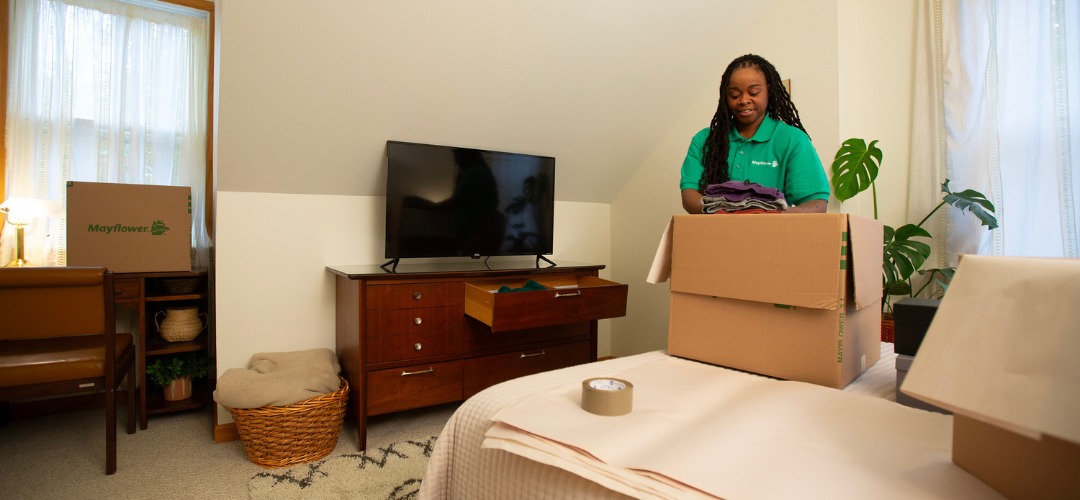
Pre-Move Access Checklist for Stamford Townhouses
|
Access Point |
What to Confirm |
|
Front entry doorway |
Clear width, compared against the widest furniture piece |
|
Interior stairwells |
Narrowest point, including any handrail projection |
|
Stair landings and turns |
Switchbacks or 90-degree turns that limit maneuvering room |
|
Upper-floor hallways |
Width against the largest item traveling to that floor |
|
Street parking or driveway |
Any city or HOA restrictions confirmed before moving day |
|
Oversized furniture |
Width, height, depth, and diagonal depth measured in advance |
What Affects Timing and Coordination for a Townhouse Move?
Timing and coordination for a townhouse move depend on the number of floors, the amount of disassembly required, parking access, and how many stairwells the crew navigates repeatedly. Costs vary based on these same factors, along with crew size and the overall scope of work.
- Number of floors and stairwells involved
- Amount of furniture disassembly and reassembly required
- Street or driveway access, including any shuttle needs
- Volume of boxes and furniture being moved
- Whether packing services are part of the scope
Because every townhouse layout is different, the most accurate way to understand what a specific move will involve is a written estimate based on an in-home or virtual walkthrough.
When Should You Bring in Professional Townhouse Movers?
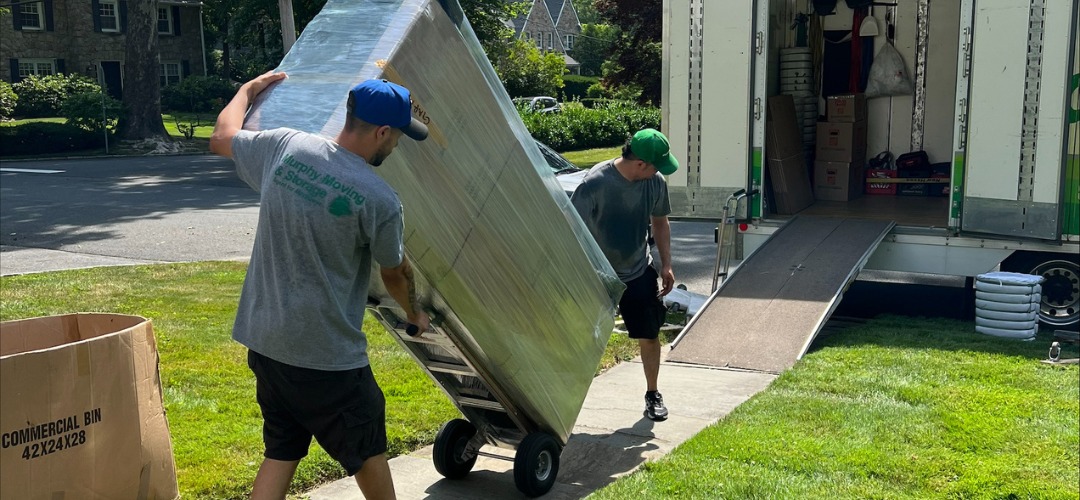
Professional townhouse movers may be especially useful when a move involves multiple floors, furniture disassembly, narrow stairwells, limited parking, or a tight schedule. Moves with fewer access challenges may require less coordination.
Consider bringing in a professional crew when:
- The home has two or more staircases between the truck and any room
- Large furniture needs disassembly and reassembly at the new address
- Street parking or HOA rules require advance coordination before moving day
- Fragile or high-value items require careful handling and clear documentation of their condition before the move.
- The timeline is tight and does not allow for a slow, self-managed pace
For any in-state relocation, townhouse or otherwise, verify that the mover holds the appropriate household goods carrier certificate or permit through the Connecticut Department of Transportation before booking.
Frequently Asked Questions
Does a Stamford townhouse move cost more than a similar single-family move?
Cost can be affected by floor count, disassembly needs, access, crew size, move volume, and the overall scope of work. A multi-story townhouse with narrow stairs often takes more time than a single-story home. Always get a written estimate based on your specific layout rather than a general average.
How can movers protect townhouse stairs and walls?
Movers may use floor runners, padding, corner guards, and railing protection in high-traffic areas to reduce the risk of scuffs and damage during tight stairwell turns.
Should boxes be labeled by floor when moving into a townhouse?
Yes. Labeling boxes by destination floor instead of just room helps movers place items efficiently. Using color-coded stickers for each level can reduce backtracking through stairwells and save time.
Can large furniture fit through narrow townhouse entrances?
It depends on your specific measurements. Before moving day, measure doorways, hallways, and stairwell landings. Don’t forget to check the diagonal depth of furniture for 90-degree stair turns. If a piece doesn’t clear, plan to disassemble it beforehand to avoid damage.
How can I make moving day easier in a multi-level townhouse?
Organization is key. Clear walkways, stage boxes on their destination floors before the crew arrives, and ensure parking is secured. A pre-move walkthrough with your lead mover helps them strategize for tricky turns and specific furniture items.
Ready to Plan Your Stamford Townhouse Move?
Murphy Moving & Storage coordinates residential relocations throughout Stamford and the surrounding Connecticut and New York corridor. A dedicated move coordinator manages the process from the initial walkthrough through final delivery, helping keep access, sequencing, and floor-by-floor planning organized.
Request a personalized walkthrough and estimate for your Stamford townhouse move.
