

What’s In This Guide
- What Determines the Right Office Movers Near Me in Greenwich
- Common Planning Mistakes That Cost Small Businesses Workdays
- Building a 30/60/90-Day Office Relocation Checklist
- Handling IT Equipment, Servers, and Sensitive Records Without Downtime
- Protecting Records for Medical, Legal, and Financial Offices
- Employee Communication During an Office Move
- Estimating Costs and Timeline Factors for a Greenwich Office Move
- When to Bring In a Professional Office Moving Team
- Frequently Asked Questions
- Ready to Plan a Business Move That Doesn’t Cost You Workdays?
Moving a small business is not the same as moving a household. A law firm, medical practice, financial advisory firm, or boutique agency in Greenwich has active client files, IT systems that cannot stay offline for long, and employees who still need to meet deadlines during the transition. The real challenge is not just finding office movers near you in Greenwich. It is building a plan that keeps the business running while the physical move happens around it.
Quick Facts
- A 30/60/90-day planning window gives medical, legal, and financial offices enough lead time to update licenses, notify clients, and coordinate IT cutover without rushing.
- Back injuries from manual material handling can cause significant disability and economic costs. Using a trained commercial moving team helps reduce these risks compared to having internal staff move heavy equipment.
- Practices covered by HIPAA must maintain administrative, physical, and technical safeguards for electronic protected health information, including facility access controls when systems, devices, or storage locations change during relocation.
- Engaging a commercial moving team early allows for better coordination of building access requirements, realistic scheduling, and advanced planning of IT and records handling before move-day.
- Move-day sequencing determines whether a team can answer phones and access client files on day one at the new address.
What Determines the Right Office Movers Near Me in Greenwich
The right commercial movers in Greenwich, CT, for a small business relocation should have direct experience with office moves.
Homeowners searching for movers usually focus on furniture and boxes. A business owner searching for office movers near me in Greenwich needs a team that understands:
- How to sequence a move so phones, computers, and files are usable again quickly
- How to handle servers, monitors, and shared office equipment without damage
- How building access rules at a Greenwich office park or downtown building affect loading times
- How to keep confidential records secure in transit
Common Planning Mistakes That Cost Small Businesses Workdays

Lost workdays during an office move can often be traced to avoidable business move planning mistakes.
Booking a moving date without confirming building access. Many Greenwich office buildings require advance notice for freight elevator use or loading dock reservations. A move date without a confirmed access window can stall an entire relocation.
Waiting too long to notify IT vendors. Internet and phone providers may require several weeks of lead time to activate service at a new address. Waiting until move week can create a communication gap that directly affects client-facing work.
Skipping a records inventory. Offices that handle patient files, client contracts, or financial records need a documented chain of custody. Without one, a missing box becomes a compliance problem.
Underestimating furniture disassembly time. Modular desks, filing systems, and conference room furniture often require disassembly and reassembly, which takes longer than most businesses budget for.
Failing to phase the move by department. Moving an entire office in one uncoordinated push, instead of by department or function, increases the chance that no one has a usable workstation on day one.
Building a 30/60/90-Day Office Relocation Checklist
A phased timeline gives a small business enough lead time to handle licensing, IT, and staff logistics without compressing everything into the final week.
90 to 61 Days Before the Move
- Confirm the new lease terms and any building access requirements
- Assign a single relocation point of contact internally
- Request a walkthrough and moving estimate from a commercial moving team
- Begin an inventory of furniture, equipment, and records that will move
60 to 31 Days Before the Move
- Notify IT, phone, and internet vendors to schedule cutover at the new address
- Update licenses, permits, and any regulatory notifications tied to a change of business address
- Begin notifying clients or patients of the upcoming move without including confidential details in emails, mailers, website updates, or public communications
- Confirm packing supply needs, including secure containers for sensitive records
30 Days Before the Move
- Finalize the move-day schedule with building management at both locations
- Label and inventory boxes by department or destination room
- Back up servers and encrypt portable devices before they are packed
- Confirm a weekend or after-hours move window if minimizing downtime is a priority
READ MORE: How to Plan an Office Move: The Complete Checklist and Expert Tips
Handling IT Equipment, Servers, and Sensitive Records Without Downtime
IT continuity is a major factor in how many workdays a small business loses during a relocation. Equipment needs to be backed up, safely disconnected, transported without damage, and reinstalled in a sequence that gets core systems running first.
Practical steps that reduce IT downtime include:
- Backing up all servers and critical files before disconnecting any hardware
- Labeling cables and ports before disassembly to speed up reinstallation
- Scheduling internet and phone activation to align with the move date
- Transporting servers and sensitive electronics separately from general office furniture
- Testing systems at the new location before employees arrive for their first workday
Manual handling of heavy equipment, including copiers, servers, and filing cabinets, carries real injury risk when it is rushed or handled without proper technique. Back injuries linked to manual material handling can create serious disability, lost productivity, and workers' compensation exposure. Working with a commercial moving team trained in equipment handling helps reduce this risk compared to relying on internal staff to move heavy IT hardware.
Protecting Records for Medical, Legal, and Financial Offices

Medical, legal, and financial offices carry a heightened responsibility for how records are handled during a relocation, since these documents are frequently subject to federal or state confidentiality requirements.
For medical offices specifically, the HIPAA Security Rule requires administrative, physical, and technical safeguards for electronic protected health information, including facility access controls when systems or devices containing ePHI are relocated. Paper records should also be handled under strict privacy and security procedures during the move. Practical steps for any office handling sensitive records include:
- Using sealed, numbered containers for confidential files rather than open bins
- Limiting record handling to a small number of authorized staff or vetted moving personnel
- Maintaining a written log of what was packed, by whom, and where it was delivered
- Avoiding any public announcement that includes specific client or patient details
- Reviewing agreements with any vendor, including the moving company, that will have access to confidential materials
Law firms and financial advisory firms should apply the same logic even when HIPAA does not apply. Client confidentiality obligations often extend to how files are transported.
Employee Communication During an Office Move
Employees who understand the plan are better prepared to remain productive during a transition. Communication should start as soon as the move is confirmed.
A workable communication approach includes:
- An early company-wide announcement with the confirmed move date and new address
- A clear point of contact for move-related questions
- A written schedule showing which days involve reduced access to files, systems, or workstations
- Guidance on what employees need to personally pack versus what movers will handle
- A plan for temporary remote work if systems will be offline for part of the transition
Clear, early communication reduces uncertainty and helps employees prepare for disruptions in the days leading up to a move.
Estimating Costs and Timeline Factors for a Greenwich Office Move
Costs for a small business relocation vary based on several factors rather than a single flat rate. Office size, the amount of furniture and equipment being moved, distance between locations, building access restrictions, and whether weekend or after-hours scheduling is required all affect the overall estimate.
Other factors that can influence pricing include:
- The number of workstations, filing systems, and pieces of specialized equipment
- Whether furniture needs disassembly and reassembly
- Packing materials required for sensitive records or electronics
- Building-specific requirements, such as elevator reservations, loading dock access, or Certificates of Insurance (COI)
- Timing, since weekend or evening moves may involve different scheduling considerations than a standard weekday move
Because every office layout and building situation is different, a walkthrough or consultation tailored to the specific space and timeline provides a more reliable cost estimate.
When to Bring In a Professional Office Moving Team
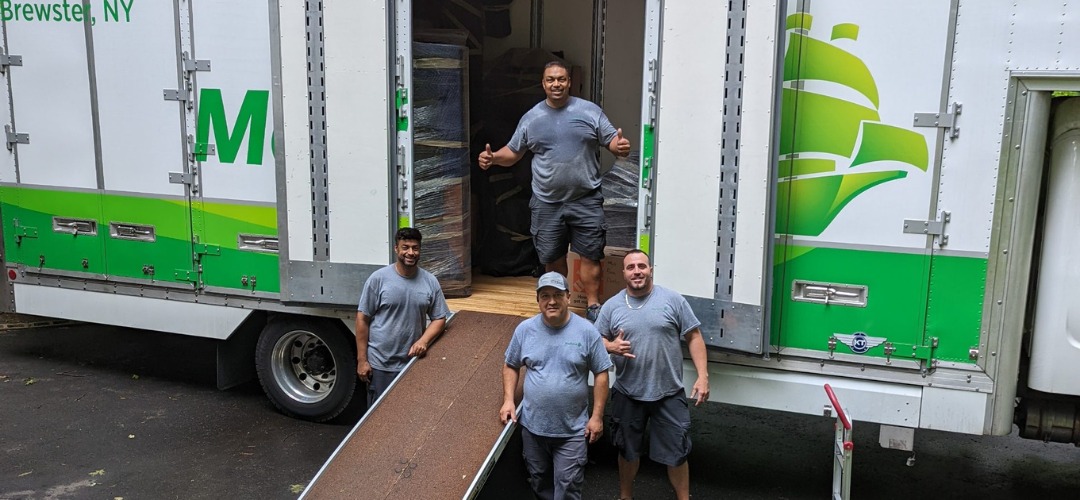
A small business should bring in a professional commercial moving team as soon as a move date is being discussed, not after the lease is signed and the timeline is already compressed. Early involvement allows the moving team to flag building access issues, recommend a realistic schedule, and help plan IT and records handling before those decisions are made ad hoc.
A professional team is particularly valuable when the office includes:
- Sensitive client, patient, or financial records requiring secure handling
- Specialized IT equipment, including servers or networked hardware
- Modular furniture systems that require disassembly and reassembly
- A building with strict access windows, such as a shared commercial property in downtown Greenwich
Frequently Asked Questions
Can an office move happen without shutting down for a full business day?
In many cases, yes. Scheduling the physical move for a weekend or after standard business hours allows furniture setup and IT reinstallation to happen before employees arrive, which can reduce or eliminate a full lost workday.
What should be prioritized on move-in day at the new office?
IT infrastructure and client-facing areas, such as reception, should be set up first. Unpacking by department rather than all at once helps employees resume work in stages instead of waiting for the entire office to be unpacked before anyone can function.
What should we do if our building has specific freight elevator or loading dock requirements?
Confirm all building access requirements, including elevator reservations and insurance certificate needs, well in advance of your move date. Partnering with experienced commercial movers early allows them to help you coordinate these logistics and avoid scheduling conflicts that could delay your move.
How can we ensure our IT and phone systems are functional on our first day at the new office?
Schedule your IT, internet, and phone service cutovers at least several weeks before your move date. It is also critical to label all cables and ports before disassembly and to perform a thorough systems test at the new location before employees arrive to ensure everything is operational.
How should employees prepare their personal items for the move?
Employees should pack their own personal items in designated moving crates or boxes provided by the company, clearly labeled with their name and destination area. It is recommended to take home highly valuable or fragile personal possessions prior to the move to prevent any loss or damage.
Ready to Plan a Business Move That Doesn’t Cost You Workdays?
Murphy Moving & Storage provides commercial relocation services for small business moves across Greenwich and the surrounding Connecticut and New York markets, coordinating around active client schedules, building access rules, IT needs, and sensitive records.
If a Greenwich office relocation is on the calendar, a walkthrough is the clearest way to get a realistic timeline and plan.
